

I was on a podcast a few weeks back and was asked a question that surprised me:
“How do women approach leadership differently?”
A few days later I saw a consultant give a presentation on “Generational Differences” in the workplace. In other words, what does Gen Z care about compared to Boomers, what do Millennials want compared to Gen X.
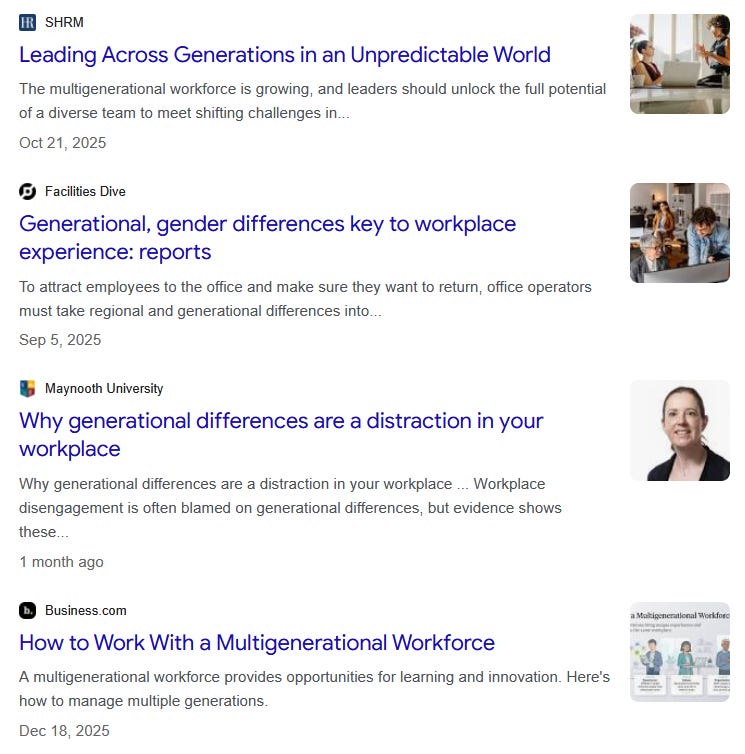
The question and topics are understandably appealing. In business we spend most of our time thinking about people, and particularly hiring, leading, and motivating. There’s no shortage of headlines about the “generational divide”…
And talking about the differences between men and women is as old as time…
And while of course there are differences…
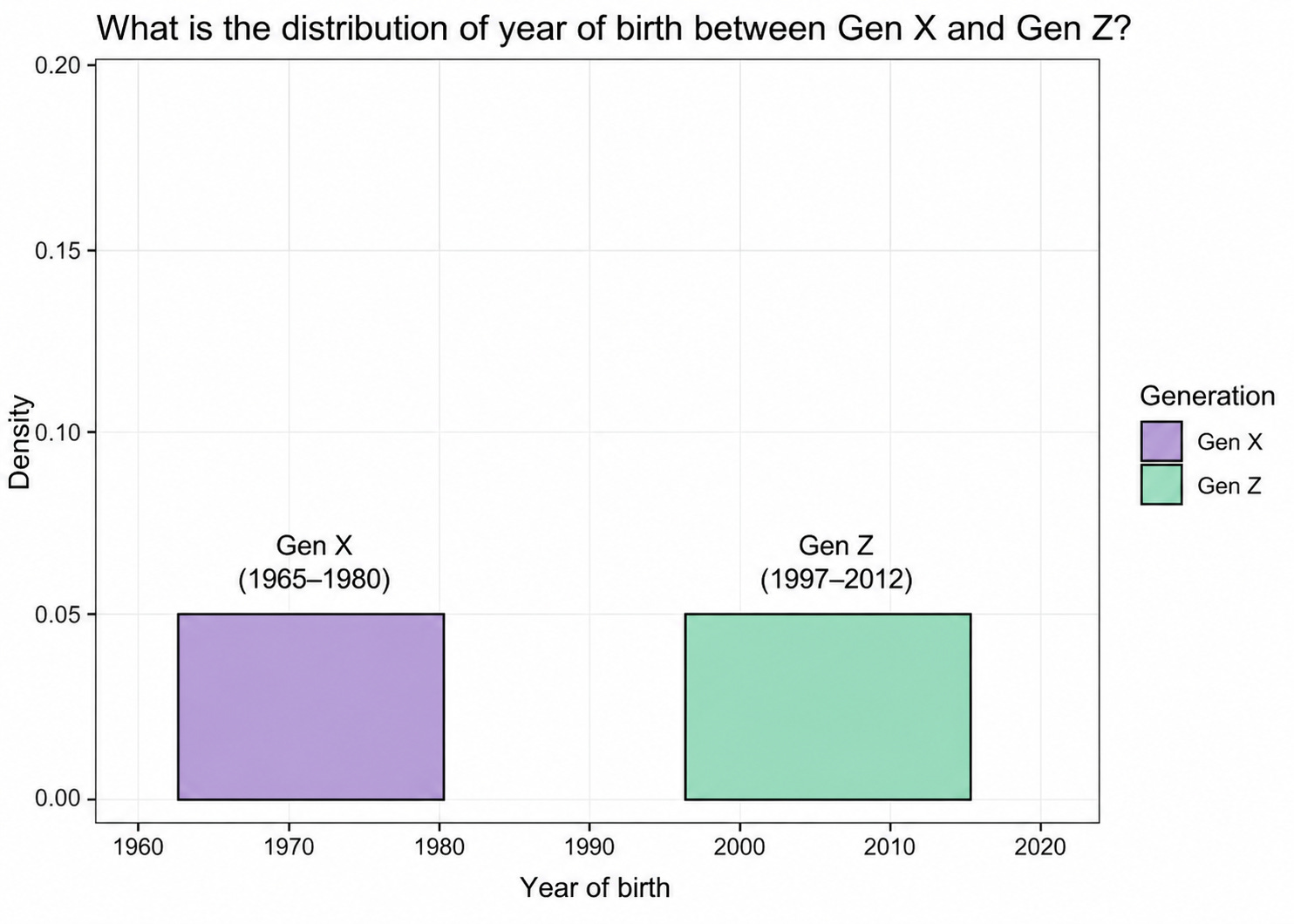
You’re either Gen Z or you’re not. Ditto any other arbitrary generation bucket you fall into.
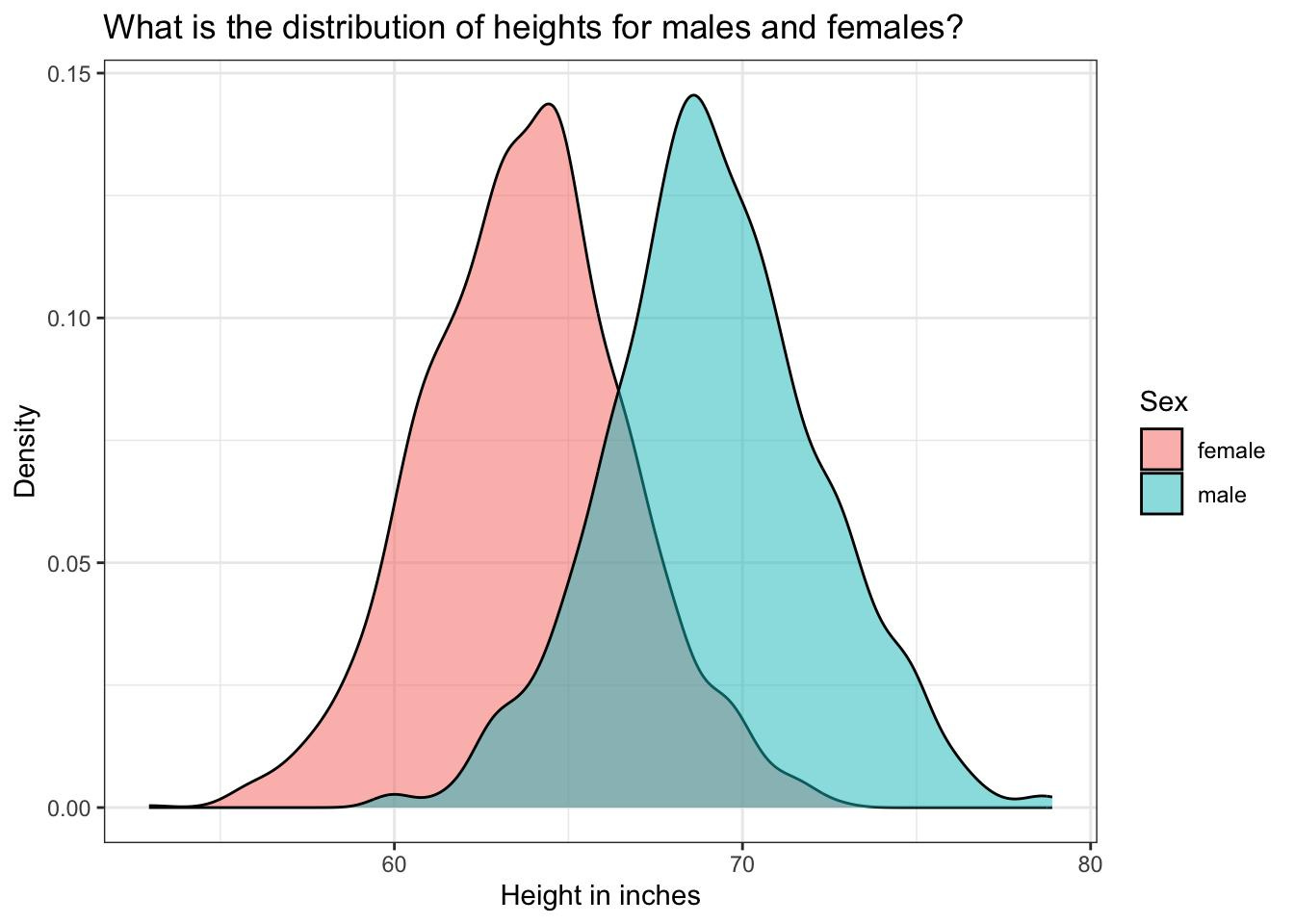
The average height for men in the U.S. is 5’-9”—with most all standing between 5’-3”
and 6’-3”, while women average 5’-3” and are rarely shorter than 4’-11” or taller than 5’-11”.
When it comes to the differences in traits that actually impact workplace performance, they are not near as stark as many headlines and some gurus would have us believe.
So my answer to “How do women approach leadership differently?”…what specific person are we talking about?
In the world of business advice there is a big market for reducing the complexity of certain decisions. By presenting sex and age brackets as uniform monoliths we can be sold secret decoder rings. Adjust the dials to the correct sex and age, and suddenly we can unlock all the details of their tendencies and motivations.

Unfortunately, and as we know, the real world and real people are more nuanced. And if we’re wanting to make good decisions as leaders we best not sacrifice important nuance for (false) convenience.
To be clear, there is some truth to common generalizations about men, women, and different generations.
Women do tend to be more collaborative and relationship-oriented in team settings.1
Men are more likely to take risks or compete for status in work environments.2
Younger employees do tend to place more emphasis on flexibility and work-life balance.3
While older employees to place more emphasis on stability and long term job security. 4
And so while I can’t argue many of the headlines in the media or claims from gurus are wrong, that doesn’t mean they’re right for the decision you’re trying to make.
Here’s the catch:
Just because something may be true at a population level doesn’t mean it’s useful for making decisions at an individual level.
I don’t care about the preference of the “average” Millennial, or personality traits of the prototypical man. I care about Ryan, the 38-year old project manager that applied for an open role. (Substitute your “Ryan” and decision to be made here).
And zooming in on the decision to be made is one of three good practices when it comes to dealing with new information:
What is this information actually telling me? (What’s the split — 60/40? 55/45? What does “statistically significant” mean here in plain numbers?)
What kind of decision am I making? (One bet across many people, or one decision about one person in front of me?)
What other information can I access? (Is this baseline all I have, or can I zoom in — ask, observe, probe?)
If you’re running for political office or designing a marketing or recruitment program targeted at thousands of people then by all means, population differences (even if small) can be very valuable. But for the typical business decision—#2 is about individual decisions, while #3 offers the opportunity for resumes, interviews, and conversations. And it turns out, #1 was never that useful to start with.
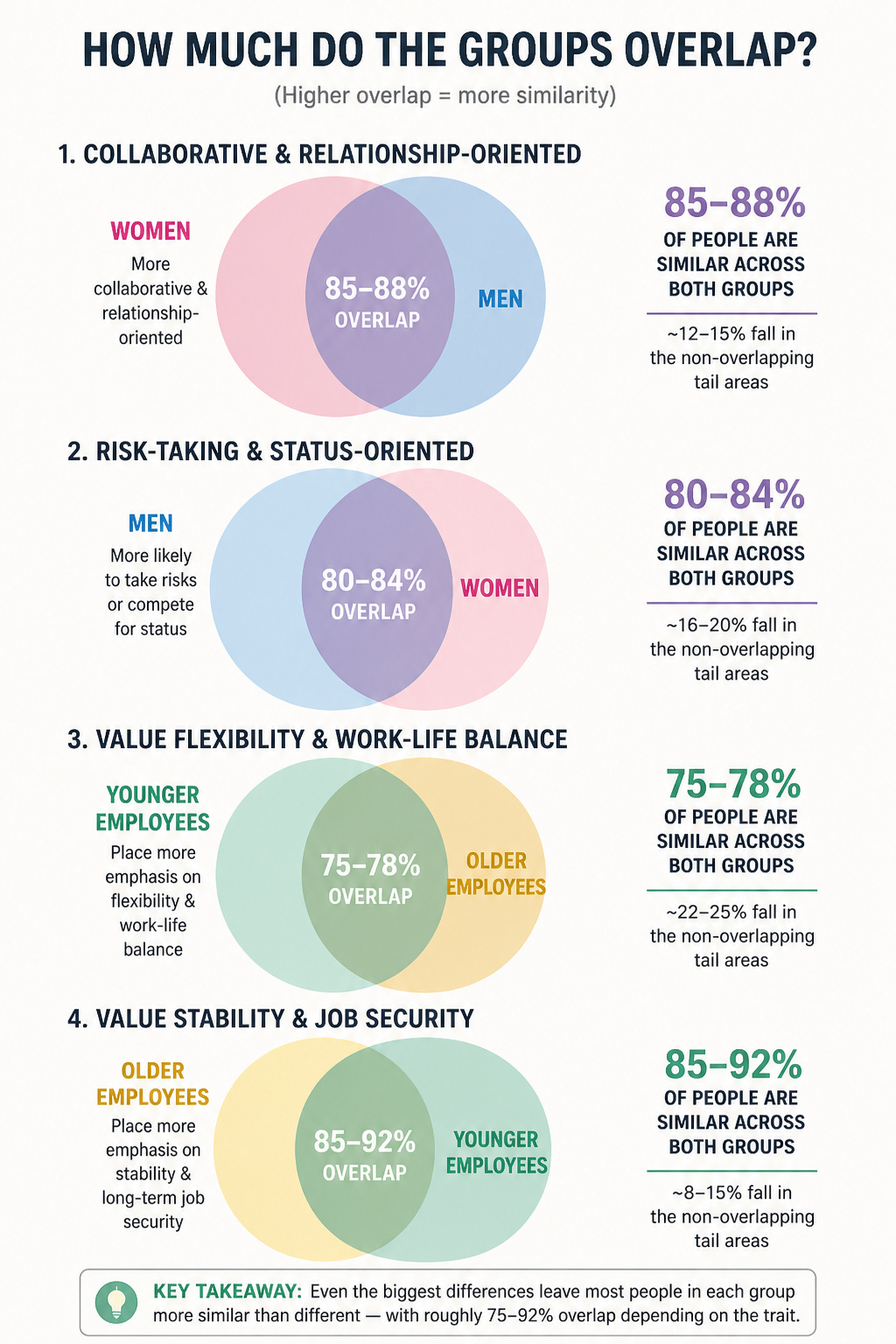
And to avoid the idea that I’m cherry-picking data points, below is a more thorough analysis of the overlap between sex and age brackets in regard to personality and work preferences. Again, the key takeaway: people are far more alike than different.
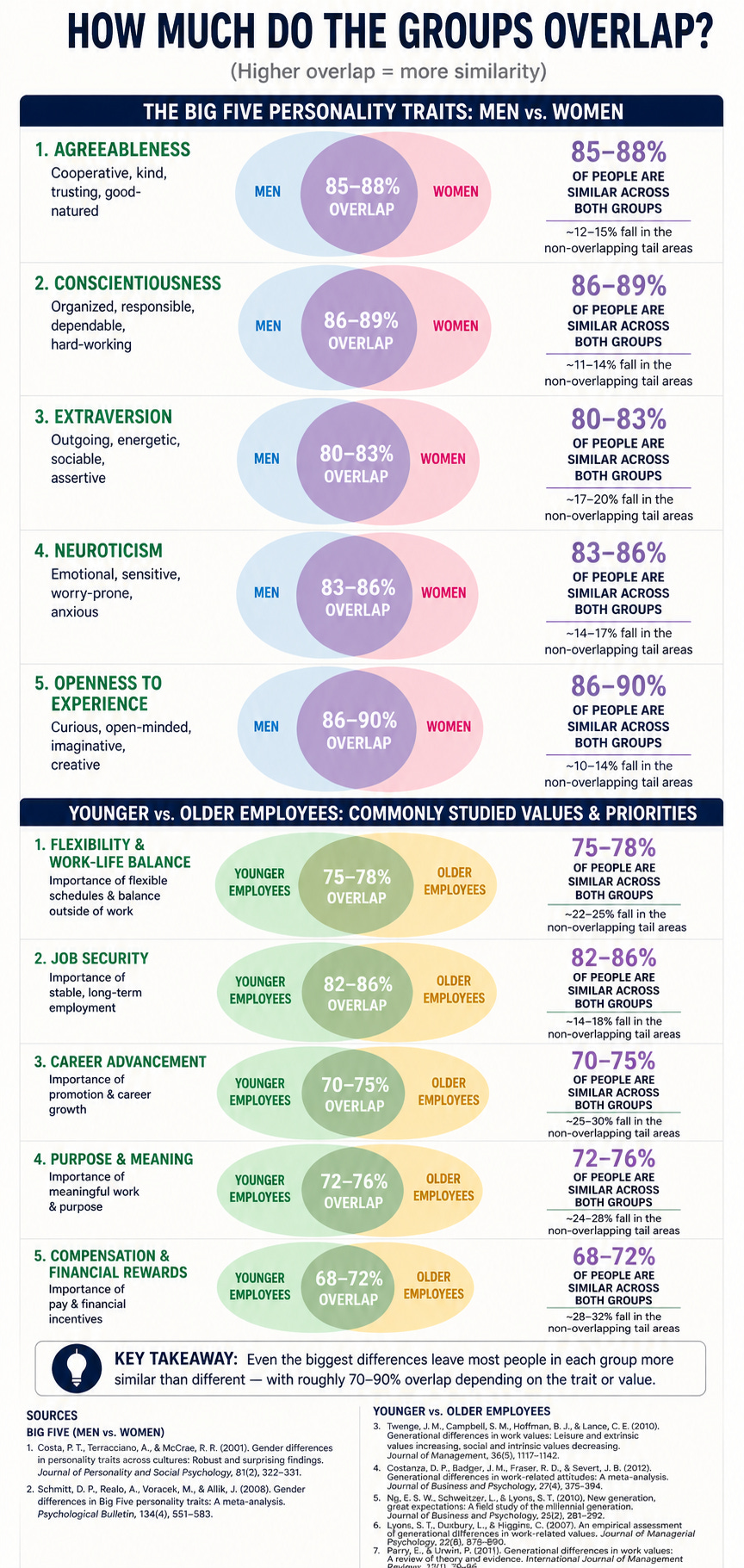
So, in general we’d be wise to avoid the “Siren Song” of reducing people to their sex and age.
While it’s easy to cook-up a story about why life experience, cultural shifts, and different expectations placed on individuals would lead them to be predictably different, the data just doesn’t support the intuition.
Because if we revisit our checklist from earlier:
What is this information actually telling me? (What’s the split — 60/40? 55/45? What does “statistically significant” mean here in plain numbers?)
What kind of decision am I making? (One bet across many people, or one decision about one person in front of me?)
What other information can I access? (Is this baseline all I have, or can I zoom in — ask, observe, probe?
We often find we’re making individual decisions against a backdrop of headlines and claims that really aren’t “telling” us all that much. And we’d be better off focusing on #3….What other information can I access.
We’ll cover that next time—how collecting the right information about individual people massively outperforms predictions based on general trends around sex and age.
In other words, how to be generally wrong, but specifically right in your next decision about people.
Thanks for reading The Craft of Business. Subscribe for free to receive new posts and support my work.

Learn more about my latest book “Craft: The Expedition of Business” at:
https://TheExpeditionofBusiness.com
Looking to grow or improve your business? Become a better leader? Or master the craft of business? Learn more about working with me at:
https://YourCraftYourClimb.com
Schmitt et al. (2008): https://pmc.ncbi.nlm.nih.gov/articles/PMC3251566/ ; Hyde (2005): https://psycnet.apa.org/record/2005-09810-003
Hyde (2005): https://psycnet.apa.org/record/2005-09810-003
Twenge et al. (2010): https://journals.sagepub.com/doi/10.1177/0149206309352246
Costanza et al. (2012): https://link.springer.com/article/10.1007/s10869-012-9259-4